A tool organizer offers compact, portable order while a pegboard wall gives visible, wall-mounted access.
I’ve spent years building and refining workshop storage. I’ve used a tool organizer and a pegboard wall in homes and small shops. This article compares tool organizer vs pegboard wall in practical detail. You’ll get clear pros, cons, cost guidance, installation tips, and real-world lessons so you can pick the right system for your space and work style.
What is a tool organizer?
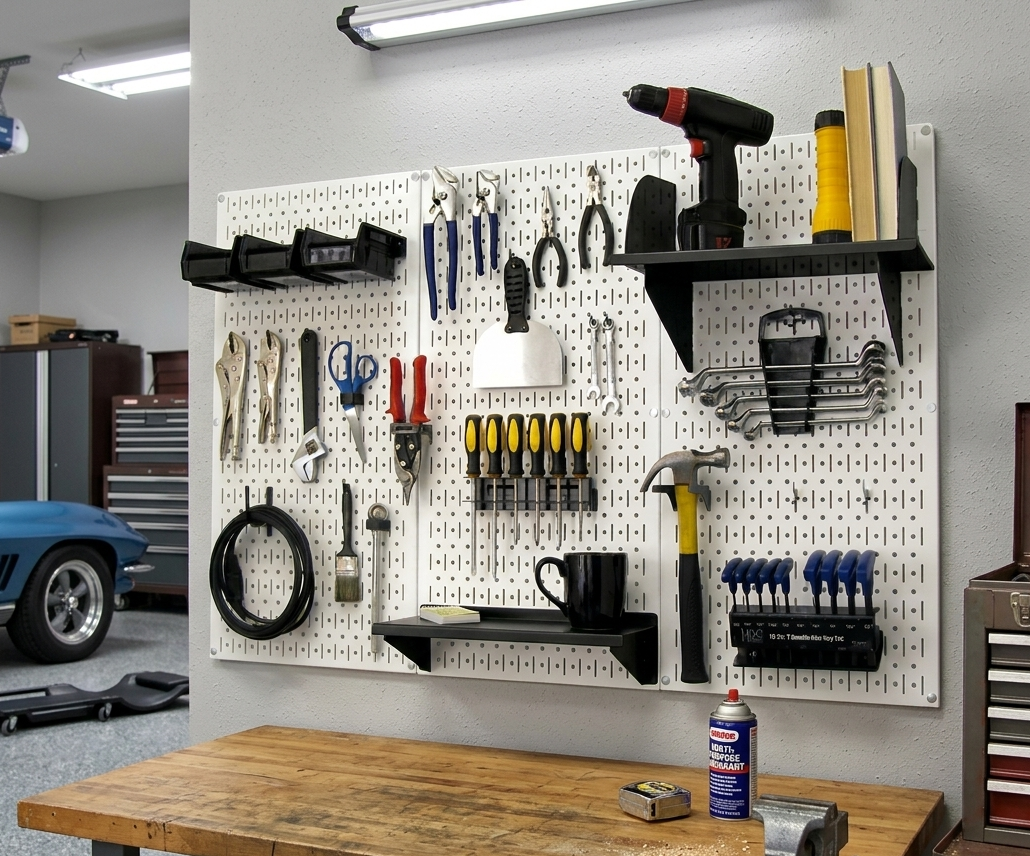
A tool organizer is any storage system that groups tools into a compact, ordered layout. It includes portable toolboxes, foam-insert organizers, rolling tool chests, and drawer systems. These systems keep tools protected, sorted, and often lockable.
Tool organizers work well when you need mobility or secure storage. They range from small organizers for screwdrivers to large tool chests for mechanics. I learned that foam inserts and labeled trays speed tool retrieval more than open bins.
What is a pegboard wall?
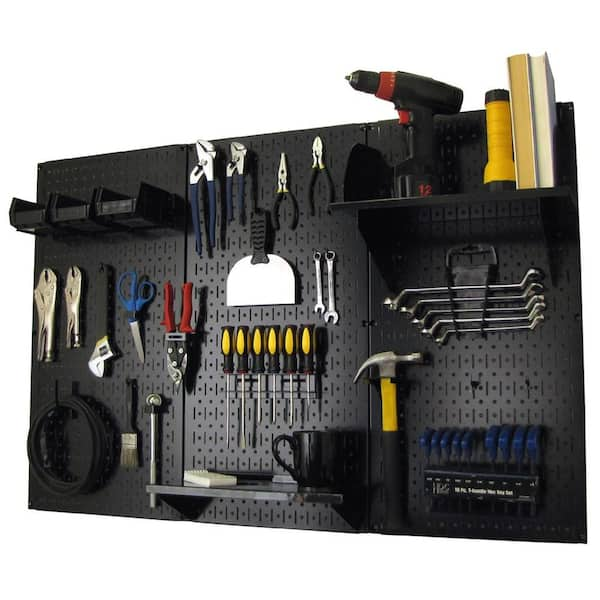
A pegboard wall is a vertical panel with holes or slots used to hang tools. Hooks, shelves, and specialized holders attach to the board. Materials include metal, hardboard, and perforated plywood.
Pegboard walls make tools visible and easy to reach. They shine in fixed workspaces and DIY garages. Early on, I underestimated the need to mount pegboard to studs; tools pulled loose until I added proper backing.

Direct comparison: tool organizer vs pegboard wall
Here is a practical side-by-side look at the main factors to compare when weighing tool organizer vs pegboard wall.
Accessibility
- Tool organizer: Holds tools in drawers or cases. Access is fast once you open drawers or pull trays. Good for grouped tool sets.
- Pegboard wall: Tools are visible and instant to grab. Best for frequently used items.
Portability
- Tool organizer: Highly portable. Toolboxes and cases travel to job sites.
- Pegboard wall: Fixed. Not suitable for mobile work unless you use removable panels.
Capacity and scale
- Tool organizer: Scales by chest size and drawer count. Often denser storage per square foot.
- Pegboard wall: Scales across wall space. Great for spreading tools and accessories.
Organization and visibility
- Tool organizer: Can hide clutter and protect tools. Foam organizers give defined spots.
- Pegboard wall: Visual layout makes missing tools obvious. Easier to keep tidy with outlines and labels.
Security and protection
- Tool organizer: Offers locking and better protection against dust and drops.
- Pegboard wall: Exposes tools to dust and accidental knocks unless protected.
Cost and installation
- Tool organizer: Cost varies widely. Small organizers are cheap; full tool chests cost more.
- Pegboard wall: Low-cost DIY option, but costs rise with metal pegboard, professional backing, and accessories.
Overall, tool organizer vs pegboard wall comes down to mobility and protection vs visibility and quick access.

Benefits and limitations
Below are compact lists for each system to help you weigh trade-offs.
Benefits of a tool organizer
- Compact, portable storage for job sites.
- Better protection from dust and impact.
- Locking options for security.
- Dense storage saves floor space.
Limitations of a tool organizer
- Slower to access some tools.
- Heavy tool chests are hard to move.
- Can hide tools, making inventory harder.
Benefits of a pegboard wall
- Tools are visible and easy to grab.
- Encourages tidy layout and quick inventory.
- Affordable and highly customizable.
- Makes workbench workflows more efficient.
Limitations of a pegboard wall
- Exposes tools to dust and damage.
- Requires wall space and solid mounting.
- Weight limits require reinforced backing for heavy tools.
From my shop experience, I use a mix: pegboard for hand tools at the bench and a tool organizer for sockets, specialty bits, and mobile jobs. This hybrid reduces downtime and keeps expensive tools secure.
Installation, cost, and materials
Installing either option has practical needs. Here are costs and steps to plan.
Tool organizer basics
- Materials and types: plastic cases, steel chests, foam inserts.
- Average costs: small organizers $10–$50; quality chests $200–$2,000.
- Installation: Little to none for portable types; rolling chests need floor space and sometimes casters added.
Pegboard wall basics
- Materials and types: hardboard, metal, perforated plywood.
- Average costs: basic pegboard panels $10–$50 each; metal pegboard and accessories cost more.
- Installation steps:
- Locate studs or add plywood backing.
- Mount panels level and secure.
- Place hooks and holders for heavy items near studs.
- Pro tip: Use plywood backing behind pegboard for heavy tools to prevent pull-through and damage.
Budget tip: Combine a pegboard over your workbench with a small tool organizer for sockets. This saves cost and improves efficiency.

How to choose: use-case driven guide
Answer these simple questions to decide between tool organizer vs pegboard wall.
Step 1: Do you move tools often?
- Yes: Lean to a tool organizer.
- No: Pegboard wall is a good choice.
Step 2: Do you have wall space and studs?
- Yes: Pegboard wall fits well.
- No: Use mobile organizers or modular cabinets.
Step 3: Do you need security?
- Yes: Choose lockable tool organizers.
- No: Pegboard may be fine.
Step 4: What’s your budget?
- Low: Start with pegboard and basic organizers.
- Medium/high: Invest in a quality tool chest plus pegboard for frequently used items.
Quick answers (PAA-style)
- Can a pegboard hold heavy tools? Properly mounted to studs or backed with plywood, pegboard can hold heavier tools with the right hardware. Metal pegboard and heavy-duty hooks increase load capacity.
- Are tool organizers better for professionals? For mobile professionals, tool organizers are often better because they protect tools and travel easily. Stationary pros might combine organizers with wall storage.
- Is pegboard better for small spaces? Yes, pegboard uses vertical space and keeps tools off worktops, helping small workshops stay organized.

Source: amazon.com
Practical tips, mistakes to avoid, and personal insights
I’ve installed many systems. Here are lessons from hands-on use.
Practical tips
- Use foam inserts in drawers to prevent tool shifting.
- Outline pegboard tool locations with paint or tape to make return-to-place easy.
- Place frequently used tools at shoulder height for ergonomics.
- Label drawers and pegboard zones.
Common mistakes to avoid
- Mounting pegboard without backing or not anchoring to studs.
- Overloading hooks beyond their rated weight.
- Relying on a single large organizer for diverse tool types.
Personal insight
I once stored heavy wrenches on a poorly backed pegboard. Hooks bent and the board cracked. After switching to a plywood-backed metal pegboard and moving sockets to foam-organized drawers, my workflow got faster and my tools lasted longer. These small changes saved me hours over a year.

Frequently Asked Questions of tool organizer vs pegboard wall
What is the main difference between a tool organizer and a pegboard wall?
A tool organizer is a portable or enclosed storage unit that protects tools. A pegboard wall is a fixed, vertical system that exposes tools for quick access and visibility.
Which option is better for small garages?
Pegboard walls use vertical space and are usually better for small garages. Combining pegboard with a small tool organizer gives both visibility and secure storage.
Can a pegboard hold heavy tools like power drills?
Yes, if you mount pegboard to studs or plywood backing and use heavy-duty hooks. Metal pegboard and reinforced anchors offer higher load capacity.
How do I secure tools in a portable organizer during transport?
Use foam inserts, divided trays, and locking latches to prevent shifting and protect tools during transport. Heavy items should sit low and be cushioned.
Should I use both systems together?
Yes. Many workshops benefit from a pegboard for frequent tools and tool organizers for sockets, specialty tools, and transport. The combo balances speed and protection.
How much does it cost to set up a quality pegboard and tool organizer combo?
Expect to spend $100–$500 for a modest combo with quality pegboard panels, hardware, and a medium organizer. High-end chests and metal pegboards raise cost.
Conclusion
Both tool organizer vs pegboard wall systems have clear strengths. Tool organizers give security, portability, and dense storage. Pegboard walls give visibility, quick access, and flexible layout. For most people, a mixed approach works best: pegboard for hands-on, frequent tools and organizers for sockets, specialty gear, and mobile work.
Decide based on how you work, your space, and budget. Try a small pegboard zone first and add organizers where tools need protection or transport. If you found this helpful, leave a comment with your workshop setup or subscribe for more hands-on tips and installation guides.