Pick weatherproof fabric, the right thickness, and precise size for lasting comfort.
I’ve spent years testing outdoor cushions on patios, decks, and rooftops. I know how to choose outdoor chair cushions that feel great, last through sun and rain, and update your outdoor style. Read on for a clear, practical guide to fabrics, fills, sizing, care, and buying tips that help you pick the best outdoor cushion for your chair.

Why the right outdoor chair cushion matters
Choosing the right cushion changes how you use your outdoor space. A good cushion adds comfort, resists weather, and keeps your furniture looking fresh.
When you learn how to choose outdoor chair cushions well, you save time and money. You avoid flimsy foam, faded colors, and cushions that sag after one season. My tests show durable cushions last years with basic care.

Key factors to consider when learning how to choose outdoor chair cushions
Focus on a few core points. They guide every buying choice and keep results simple.
- Fabric durability: Choose weatherproof fabric that resists UV and mildew.
- Fill quality: Pick foam or fiber that holds shape and drains water.
- Size and fit: Measure seat depth and width. A snug cushion sits better.
- Attachment and slip resistance: Ties or non-slip backing stop sliding.
- Maintenance needs: Look for easy-clean fabrics and removable covers.
- Style and color: Choose tones that match your outdoor decor and fade resistance.
How to choose outdoor chair cushions starts with these factors. Use them as a checklist before you shop.
Materials and fabrics: what to pick and why
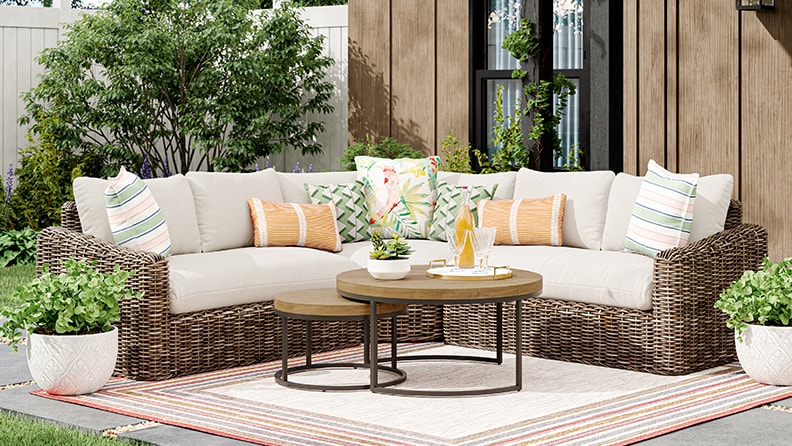
Fabric choice affects comfort, look, and life span. Use this simple guide.
- Solution-dyed acrylic: Strong UV and mildew resistance. Feels like indoor fabric.
- Polyester with waterproof coating: Budget friendly and water resistant.
- Olefin: Lightweight and quick-drying. Good for casual spaces.
- Canvas with treatment: Tough, but check for UV protection.
I prefer solution-dyed acrylic for cushions that sit in full sun. It resists fading and cleans easily. In shaded areas, a quality polyester can work well and costs less.
Fill types and comfort: match feel to use
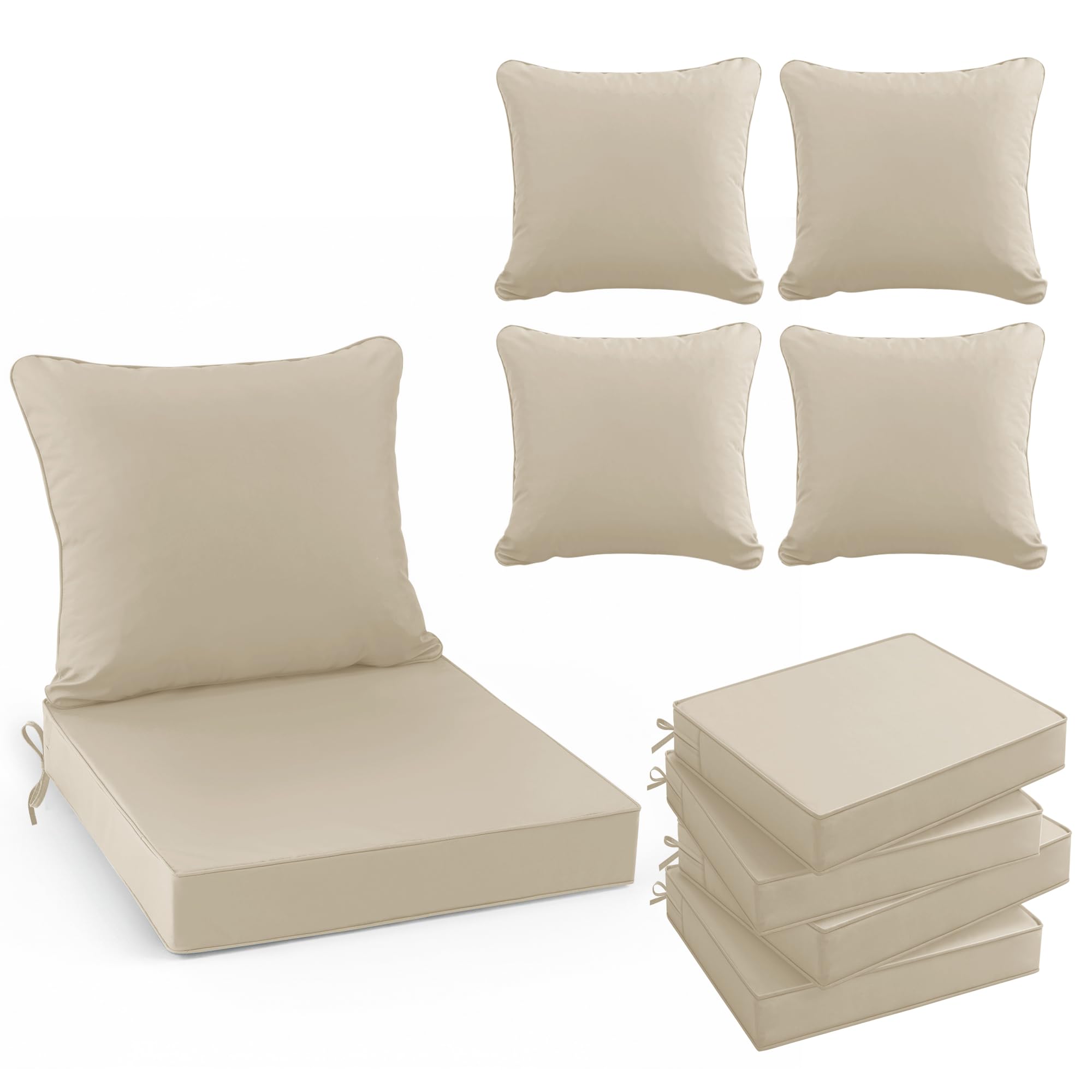
Fill affects support, shape, and drainage. Know the main types.
- High-density foam: Firm support and holds shape well. Use inside waterproof shell or covered foam.
- Quick-dry foam: Designed for outdoor use. Drains water and dries fast.
- Polyester fiberfill: Soft and lofts well, but can compress faster.
- Hollow-fiber: Light and fast-drying. Best for occasional use.
When deciding how to choose outdoor chair cushions, test firmness. I like medium-firm cushions for dining chairs and plusher fills for lounge seats. That balance protects posture and comfort.
Size, fit, and attachment: measure like a pro
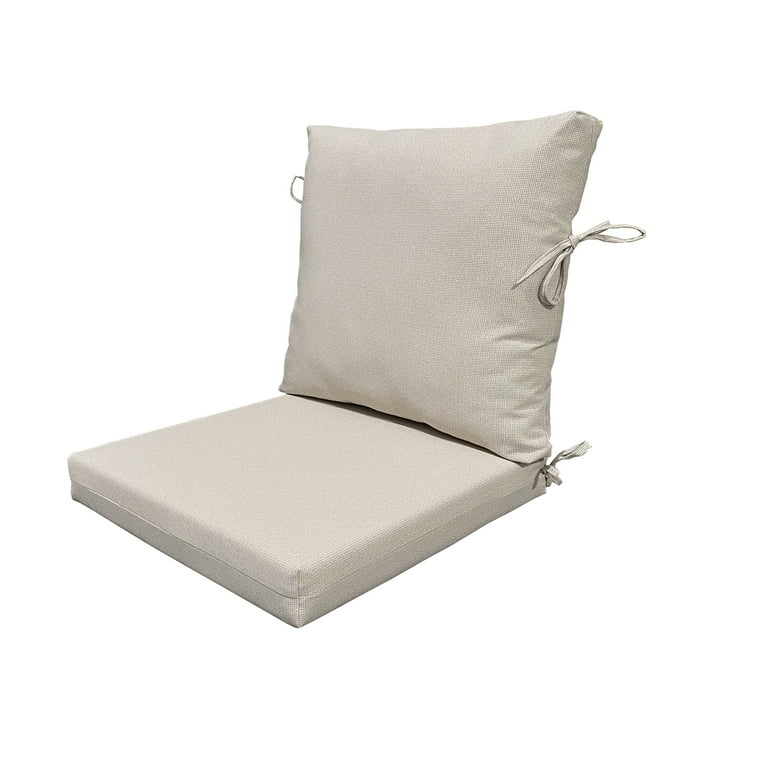
A cushion that fits looks neat and stays in place. Follow these steps.
- Measure seat depth from front edge to backrest.
- Measure seat width at the widest point.
- Note armrests, curves, and sloped seats before ordering.
- Choose ties, Velcro, or non-slip backing to secure cushions.
I once bought standard-size cushions for old chairs and they were too wide. Always measure. Custom or cut-to-fit cushions help when furniture has odd angles.

Style, color, and pattern: pick what lasts
Style matters. But durability matters more.
- Solid neutrals hide fading and match many looks.
- Bold patterns mask stains and dirt well.
- Light colors heat less in sun, but may show stains.
- Test colorfastness by rubbing damp white cloth on sample fabric.
When you think how to choose outdoor chair cushions, pick patterns for high-traffic zones. For formal patios, stick to solids. I chose patterned cushions for my grill porch. They hide spills and still look fresh after three seasons.

Care, cleaning, and storage: extend cushion life
Cleaning and storage keep cushions fresh and long-lived. Make care easy from the start.
- Look for removable covers with zippers.
- Machine-washable covers cut time and effort.
- Spot clean spills fast with mild soap and water.
- Store cushions in a dry spot when not in use or during heavy storms.
- Use breathable storage bags; avoid sealed plastic that traps moisture.
Regular dusting and sun rotation help reduce uneven fade. My simple rule: clean often, store in bad weather, and replace cheap cushions before they damage chair frames.

Budget, brands, warranties, and expectations
Set a realistic budget. Expect to pay more for durable fabric and quality fill.
- Low cost: Basic polyester or thin foam. Shorter life span.
- Mid-range: Better fabrics, quick-dry foam, more color options. Good value.
- Premium: Solution-dyed acrylic, high-density or quick-dry foam, custom sizes, longer warranties.
Warranties show maker confidence. A 2–5 year fabric warranty is strong. When you research how to choose outdoor chair cushions, factor warranty into value, not just price.
Practical buying checklist: quick steps to follow
Use this step-by-step list before you buy.
- Measure chair depth and width.
- Choose fabric based on sun and rain exposure.
- Pick fill for desired comfort and drainage.
- Confirm attachment method or add ties.
- Check care instructions and warranty.
- Read reviews and test if possible.
I follow this checklist before every purchase. It saves returns and keeps my patio comfortable.
PAA-style questions
What fabric lasts longest for outdoor cushions?
Solution-dyed acrylic is the top choice. It resists UV fade, mildew, and cleans easily.
How thick should outdoor chair cushions be?
Dining cushions work well at 2 to 3 inches. Lounge cushions are often 4 to 6 inches thick for more comfort.
Can outdoor cushions be machine washed?
Many covers are machine-washable. Always remove fill and follow the care label to avoid damage.
Frequently Asked Questions of how to choose outdoor chair cushions
What is the best way to measure cushions for chairs?
Measure seat depth, width, and note any curves. Add a small gap for removable covers if needed.
How do I stop cushions from sliding off chairs?
Use ties, non-slip backing, or Velcro. A band or strap under the seat can add extra hold.
Are outdoor cushions waterproof?
Few cushions are fully waterproof. Look for water-resistant fabrics and quick-dry fill for best results.
How often should I replace outdoor cushions?
Replace when foam loses support or fabric shows heavy wear. Good cushions often last 3–7 years with care.
Can I use indoor cushions outside temporarily?
You can, but indoor fills and fabrics will degrade fast from sun and moisture. Use them only for short periods.
How to store cushions in winter?
Store clean, dry cushions in a cool, dry place. Use breathable storage bags to prevent mildew.
Do cushion covers fade in sunlight?
Yes, some fabrics fade. Choose UV-resistant or solution-dyed fabrics for better color retention.
Conclusion
Picking the right cushions changes how your outdoor space feels and performs. Measure your chairs, choose weatherproof fabric, pick the right fill, and plan for care and storage. Use the checklist above to make fast, smart decisions.
Try one change today: measure a chair and compare two fabrics. You’ll see how simple choices boost comfort and durability. If this guide helped, leave a comment, share your cushion story, or subscribe for more outdoor living tips.