Closet shelf organization ideas turn clutter into a simple, easy-to-use system.
A well-organized closet shelf can save time, reduce stress, and make everyday dressing feel smoother. Over the years, I’ve seen how the right closet shelf organization ideas can transform a messy catchall into a space that feels calm, practical, and easy to maintain. If your shelves keep sliding back into chaos, this guide will walk you through proven, real-world strategies that make your closet work better every day.
Why closet shelf organization matters
Closet shelves often become the “drop zone” for folded clothes, shoes, bags, and random items that never seem to have a home. That is why closet shelf organization ideas matter so much. When shelves are set up with a clear system, everything is easier to find, easier to put away, and easier to keep tidy.
Good organization also helps you use space wisely. In many homes, closet shelves hold more than just clothes. They can store seasonal items, linens, accessories, and keepsakes. A smart layout gives each item a purpose and cuts down on wasteful searching.
From a practical point of view, shelf organization also helps protect your belongings. Clothes stay neater, fabric gets less wrinkled, and items are less likely to be damaged by piles or overstuffing. That is a small change that makes a big difference over time.

Start by clearing and sorting everything
Before you try any closet shelf organization ideas, take everything off the shelves. This is the step most people want to skip, but it is the one that gives you the cleanest reset. You cannot organize clutter well if you are organizing around it.
Sort items into simple groups:
- Keep: things you use often and still love
- Donate: things in good condition that you no longer wear
- Store: seasonal or sentimental items you want to keep
- Toss or recycle: damaged, stained, or broken items
I learned this the hard way during one closet overhaul. I tried to “organize around” old sweaters and random storage bins, and the result looked neat for about a week. Once I removed the extras, the shelf space finally made sense.
As you sort, pay attention to what you truly use. A closet shelf should support your daily routine, not fight against it. If a shelf holds items you never touch, it is probably not earning its place.
Use zones to make your shelves easier to manage
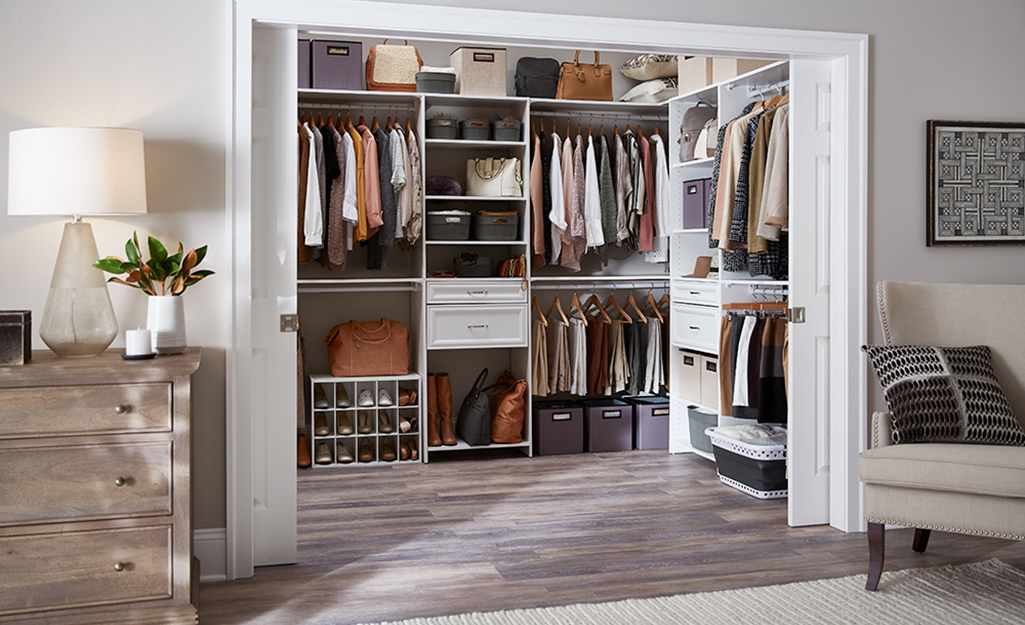
One of the best closet shelf organization ideas is to divide shelves into zones. Think of it like creating neighborhoods inside your closet. Each zone should have one clear purpose, such as tops, sweaters, workout clothes, bags, or linens.
A simple zone setup might look like this:
- Top shelves: seasonal items, suitcases, or rarely used storage
- Middle shelves: everyday clothing and accessories
- Lower shelves: shoes, baskets, or heavier items
This approach works because it matches how you naturally move through the closet. Items you use often should be easy to reach. Less-used items can live higher up or farther back.
Zones also make it easier for other people in your home to keep the closet in order. When everyone knows where things belong, the space stays more organized without constant effort.
Choose the right storage tools for each shelf
The right tools can make closet shelf organization ideas much easier to maintain. You do not need fancy products for everything, but a few smart tools can help control visual clutter and improve access.
Useful shelf tools include:
- Fabric bins for soft items like scarves or workout clothes
- Clear bins for items you want to identify quickly
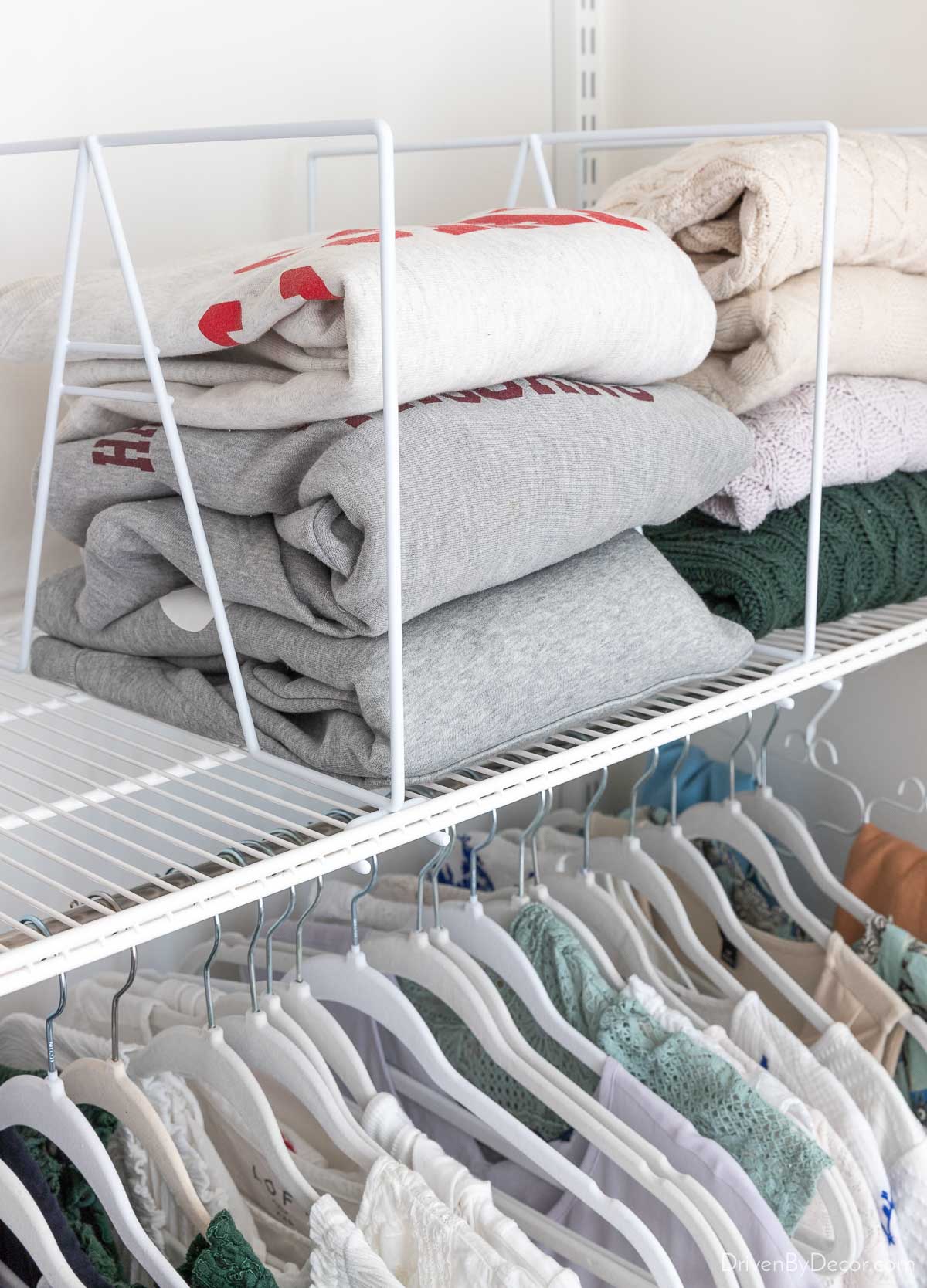
- Shelf dividers for stacks that tend to lean or collapse
- Label holders for easy sorting
- Basket bins for mixed items or grab-and-go storage
I have found that clear bins work best for shared spaces because they remove guesswork. But fabric bins are often nicer for shelves that hold softer items, since they hide visual clutter better. The best choice depends on whether you want convenience, a cleaner look, or both.
Avoid buying storage products before measuring your shelves. A bin that is too deep or too tall can waste space fast. Measure first, then choose containers that fit your closet shelf organization ideas instead of forcing the shelves to fit the product.
Fold for the shelf, not just for the drawer
Not all folding methods work well on shelves. One of the smartest closet shelf organization ideas is to fold clothing in a way that creates stable stacks and uses shelf depth well. The goal is to make each pile easy to see and easy to remove without toppling the rest.
A few folding tips that help:
- Fold items into even rectangles for neat stacking
- Keep stack heights low enough to stay stable
- Store heavier items at the bottom of a stack
- Use vertical folding for items like T-shirts and leggings in bins
I often recommend thinking of shelf stacks like books on a shelf. If they lean, they become hard to use. If they stand neatly, you can pull one item out without ruining the rest.
Sweaters, jeans, and sweatshirts usually work well folded on shelves. Delicate or stretchy items may do better in bins or drawers if they lose shape when stacked too high.
Make the most of shelf height and depth
Many people waste closet space because they only organize across the shelf, not up and down. Good closet shelf organization ideas should take shelf height and depth into account. That means using vertical space wisely and keeping the back of the shelf useful.
Try these strategies:
- Place taller bins on deeper shelves
- Use shelf risers to create a second level for folded items
- Store tall items like boots or handbags in open spaces
- Keep the most-used items near the front edge
If your shelves are deep, do not bury everyday items in the back. I have seen many closets where people forgot what they owned simply because the shelf became a black hole. A shallow bin or a labeled basket can fix that problem fast.
If the shelf is high, store only lighter or less-used items there. Heavy bins on high shelves are harder to reach and can be unsafe. Good organization should make the closet easier to use, not harder.
Label everything that is not obvious
Labels may seem small, but they make a huge difference in closet shelf organization ideas. A label removes doubt. It tells everyone where things go and helps keep the system from breaking down.
You can label:
- Storage bins
- Fabric baskets
- Seasonal containers
- Shelf zones
- Family member sections
Labels do not have to be fancy. A simple printed tag or handwritten card can work just fine. The important part is consistency.
I have seen closets stay organized longer when labels are used from the start. Without them, people tend to guess, and guessed systems fall apart quickly. Labels are like road signs for your closet.
Use the “one in, one out” rule to prevent overflow
Even the best closet shelf organization ideas will fail if new items keep coming in without a limit. That is why the “one in, one out” rule is so helpful. When you bring in a new sweater, one old sweater leaves. When you buy a new bin, something else gets removed.
This rule works especially well for clothing, accessories, and seasonal decor. It keeps shelves from becoming crowded again after you have done the hard work. It also helps you make smarter buying choices.
If you tend to overbuy basics like tees or socks, create a set limit for each shelf zone. A shelf can only hold so much, and a full shelf is often a sign to pause before adding more. This is one of the easiest ways to protect your progress.
Group items by use, not just by type
A lot of people organize shelves by category only. That helps, but closet shelf organization ideas work even better when you group items by how often you use them. This is a small shift that makes a big difference in daily life.
Try this approach:
- Everyday items: front and center
- Weekly-use items: nearby but not prime space
- Seasonal items: higher shelves or storage bins
- Backup items: clearly labeled and tucked away
For example, if you wear jeans twice a week, they should not be buried behind formalwear. If you only use a dressy bag once a month, it does not need the easiest shelf access.
This kind of organization follows your real habits. That is what makes it stick. A shelf system should match your life, not an ideal version of it.
Keep visual noise low
One of the most overlooked closet shelf organization ideas is reducing visual clutter. Even if everything is sorted, too many colors, shapes, and loose items can make the closet feel messy. Calm shelves are easier to maintain because they look orderly at a glance.
A few ways to reduce visual noise:
- Use matching bins or baskets
- Stick to a simple color palette
- Hide small items inside containers
- Avoid stacking too many loose piles
- Keep open shelf space where possible
I have noticed that closets with fewer visual distractions feel easier to use. You open the door, and your brain does not have to work as hard. That can make a small closet feel much more peaceful.
Design a system that fits your household
The best closet shelf organization ideas are not one-size-fits-all. A solo wardrobe, a shared family closet, and a child’s closet all need different systems. The trick is to design around the people who use the space.
For a single adult, a streamlined system might work best. For couples, separate shelf zones help reduce mix-ups. For kids, low shelves and easy labels are important because the system has to be simple enough for them to follow.
A family closet often works best with:
- One shelf zone per person
- Shared bins for common items
- Picture labels for young children
- Seasonal rotation so shelves do not get overloaded
If a system is too complicated, people stop using it. That is why the best closet shelf organization ideas are often the simplest ones. Easy wins better than perfect.
Rotate seasonal items to keep shelves open
Seasonal rotation is one of the most practical closet shelf organization ideas for homes with limited space. You do not need year-round access to every item. Winter sweaters, summer hats, and holiday pieces can rotate in and out as the weather changes.
A simple rotation plan:
- Pack away out-of-season clothes in labeled bins
- Store them on top shelves or under the bed
- Bring current-season items to eye level
- Recheck the closet at each season change
This keeps your shelves from becoming overcrowded. It also makes it easier to see what you actually wear right now. In my experience, seasonal rotation is one of the fastest ways to make a closet feel bigger without adding any square footage.
Common mistakes to avoid
It is easy to get excited and overdo it. Some closet shelf organization ideas look good at first but fail in real life. The biggest mistake is building a system that is too complicated to maintain.
Watch out for these problems:
- Buying too many bins before sorting
- Stacking shelves too high
- Mixing unrelated items in the same basket
- Using containers that do not fit the shelf depth
- Ignoring how often you use each item
Another common mistake is trying to make every shelf look perfect. A closet does not need to look like a showroom. It needs to work for you on busy mornings, tired nights, and everything in between.
Helpful product types for better shelf organization
If you want to improve your closet shelf organization ideas, a few simple products can help. You do not need to spend a lot, but the right tools make upkeep much easier.
Consider these options:
- Shelf dividers for separating sweater stacks
- Woven baskets for a warm, tidy look
- Clear bins for fast item identification
- Drawer-style bins for small accessories
- Hanging shelf inserts for extra vertical storage
According to home organization experts and space-planning professionals, storage works best when containers fit the item and the shelf, not the other way around. That advice holds up in real homes too. The more friction you remove, the easier it is to stay organized.
Frequently Asked Questions about closet shelf organization ideas
What is the best way to organize closet shelves?
The best way is to sort items by use and category, then assign each shelf a clear purpose. Keep everyday items easy to reach and store seasonal or rarely used items higher up.
How do I keep closet shelves from getting messy again?
Use bins, labels, and simple zones so every item has a place. It also helps to follow the one in, one out rule so shelves do not slowly fill back up.
Are clear bins or fabric bins better for closet shelves?
Clear bins are great when you want to see what is inside right away. Fabric bins are better if you want a softer look and less visual clutter.
How do I organize deep closet shelves?
Use shorter bins, shelf dividers, or front-facing baskets so items in the back do not get forgotten. Keep everyday items near the front where you can reach them quickly.
What should I store on the top closet shelf?
Top shelves are best for seasonal items, luggage, keepsakes, or backup storage. Try not to place heavy items there since they are harder and less safe to lift down.
Conclusion
The best closet shelf organization ideas are the ones that make your daily life easier. When you clear clutter, create zones, use the right storage tools, and match the system to your habits, your closet starts working for you instead of against you.
Small changes can make a big difference. Start with one shelf, one bin, or one category, and build from there. If you apply these closet shelf organization ideas step by step, you will create a space that feels calmer, cleaner, and much easier to maintain.
If this guide helped, take one idea and try it today, then come back and share what worked best for your closet.